
Benefits of Red Light for the Skin
Share
Red Light Therapy (RLT) for the Skin: How It Works and Its Benefits
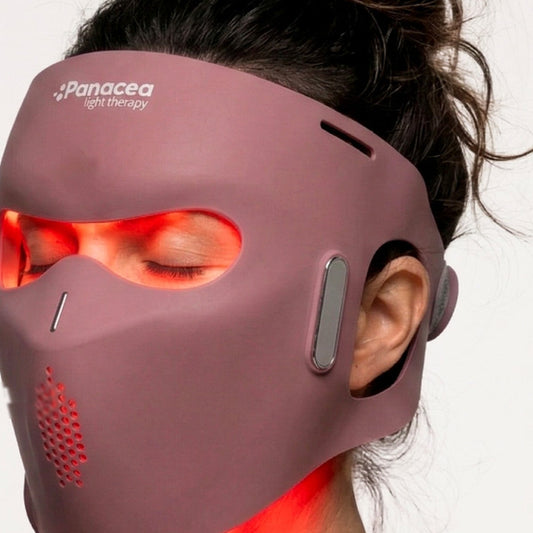
Red light therapy is a non-invasive and comfortable way to support skin health. It uses low wavelengths of red light to stimulate cellular activity, support circulation, and temper inflammatory responses, which may contribute to greater comfort with various skin concerns. In this blog post, we take a closer look at how red light therapy works, its benefits, and scientific studies supporting its use.
How Does Red Light Therapy Work?
Red light therapy uses low wavelengths of red light that penetrate deep into the skin to promote cellular activity. The light energy is absorbed by the mitochondria in the cells, which then produce more ATP (adenosine triphosphate), a molecule that provides cells with energy. This increase in ATP production may support cell renewal, promote circulation, and temper inflammatory responses, all of which may benefit the skin.
With a wavelength of 660 nm, the skin is stimulated to produce fibroblasts, the cells responsible for producing collagen and elastin. This wavelength is widely used to help reduce wrinkles and fine lines, which may contribute to fresher, more radiant-looking skin.
Wavelengths of 850 nm also offer various benefits for the skin. They stimulate ATP production in the cells, giving the skin more energy. They support the skin’s natural healing process and help temper inflammatory responses, which may contribute to a more attractive appearance.
Benefits of Red Light Therapy for the Skin
- Reduces fine lines and wrinkles
Research has described how red light therapy stimulates collagen production, which may help reduce fine lines and wrinkles. Collagen is a protein that gives the skin its elasticity, and as we age, collagen production decreases, leading to sagging and wrinkles. A study published in the Journal of Cosmetic and Laser Therapy found that red light therapy may increase collagen production and improve skin texture and tone. - Improves skin tone and texture
Red light therapy may also improve skin tone and texture by increasing circulation and stimulating cellular activity. It may help reduce hyperpigmentation, sunspots, and age spots, resulting in smoother, more even-looking skin. - Supports acne care
Research has described how red light therapy may support acne care by tempering inflammatory responses and supporting skin balance. A study published in the Journal of Investigative Dermatology found that red light therapy may reduce acne blemishes and improve overall skin texture. - Supports skin healing in scars
Red light therapy may also support the skin’s natural healing process in scars by promoting blood flow and stimulating cellular activity. A study published in the Journal of Clinical and Aesthetic Dermatology found that red light therapy may improve the appearance of scars by increasing collagen production and promoting cell growth. - Tempers inflammatory responses
An inflammatory response plays a role in many skin concerns, including acne and rosacea. Red light therapy may help temper inflammatory responses by promoting blood flow and stimulating cellular activity. A study published in the Journal of Investigative Dermatology found that red light therapy may temper inflammatory responses in skin cells.
Scientific Studies Supporting the Use of Red Light Therapy for the Skin
- A study published in the Journal of Cosmetic and Laser Therapy found that red light therapy may improve skin texture, reduce fine lines and wrinkles, and increase collagen production.
- Another study, published in the Journal of Investigative Dermatology, found that red light therapy may reduce acne blemishes and improve overall skin texture.
- A study published in the Journal of Clinical and Aesthetic Dermatology found that red light therapy may improve the appearance of scars by increasing collagen production and promoting cell growth.
- A study published in the Journal of Investigative Dermatology found that red light therapy may temper inflammatory responses in skin cells.
Want to read scientific research?
Low-level laser (light) therapy (LLLT) in skin: stimulating, healing, restoring
Effects of red and near-infrared LED light therapy on full-thickness skin graft in rats
Effects of low-power light therapy on wound healing: LASER x LED
Conclusion
Red light therapy is a non-invasive and generally well-tolerated way to support skin health. It may help reduce fine lines and wrinkles, improve skin tone and texture, support acne care, support the skin’s natural healing process in scars, and temper inflammatory responses. Scientific studies describe the use of red light therapy for the skin, and it is becoming an increasingly popular wellness application for people who want to support their skin. Results vary from person to person.
Red light therapy is a wellness application and not a replacement for medical care. Results vary from person to person; consult your doctor if you have concerns.