
Acne and red light therapy: what does the research say?
Share
Acne vulgaris is one of the most common skin conditions worldwide. It primarily affects teenagers and young adults, but acne also frequently occurs in adulthood. The condition develops due to inflamed sebaceous glands and is promoted by excessive sebum production, bacterial overgrowth (Cutibacterium acnes), and hormonal fluctuations.
In addition to standard care from a general practitioner or dermatologist, more and more people are looking for natural, skin-friendly, and non-invasive ways to support their skin. One of these is red light therapy, a form of photobiomodulation.
What is red light therapy?
Red light therapy (RLT) uses light in the range of 630 to 660 nanometers. These wavelengths are in the visible spectrum and can penetrate a few millimeters into the skin. Red light is absorbed by skin cells and stimulates mitochondria to produce more ATP (energy).
In acne, this is interesting because research suggests that red light:
- May reduce inflammatory responses in the skin
- May contribute to more balanced sebum production
- Supports natural skin recovery
- Promotes collagen production (for scar healing)
When red light is combined with blue light (460 nm), a synergistic effect has been described: blue light acts as an antibacterial agent against C. acnes, while red light reduces inflammatory responses and supports recovery.
What happens in the skin when exposed to red light?
| Biological process | Explanation |
|---|---|
| ATP production | The light stimulates the mitochondria, supporting cell recovery and the renewal of inflamed skin layers. |
| Inhibition of inflammation | By inhibiting pro-inflammatory cytokines such as IL-6 and TNF-α, redness, swelling, and pain may be reduced. |
| Sebaceous gland regulation | Red light may help reduce excessive sebaceous gland activity, which can lower the likelihood of clogged pores and breakouts. |
| Skin recovery and scar healing | Collagen synthesis is stimulated, which is important for skin recovery after breakouts and fading acne scars. |
Effective wavelengths for acne
The combination of two wavelengths is most frequently described in research:
-
Blue light (415 nm): Bactericidal against Cutibacterium acnes
-
Red light (630–660 nm): Reduces inflammatory responses and supports recovery
Using red light alone can also be beneficial, especially for inflammatory acne or for people with sensitive skin who tolerate blue light less well.
Scientific basis
-
A. Koning et al., Photodynamic therapy for moderate and severe acne vulgaris
This study describes how red light combined with a photosensitizer (5-ALA) was associated with a reduction in acne among participants. -
Razoki & Brinkhuizen. (NVDV). Lasers in dermatology.
➤ View PDF
This publication describes how red light therapy may calm the sebaceous glands and temper the inflammatory response in acne. -
Bispo, M.A.F., Fighting infections with light (University of Groningen)
➤ Download publication
The author describes how red and blue light may have an antimicrobial effect, which is also being studied in acne-related bacteria.
Application and usage advice
| Component | Recommendation |
|---|---|
| Session duration | 10 to 20 minutes per session |
| Frequency | 3 to 5 times per week, preferably regularly over several weeks |
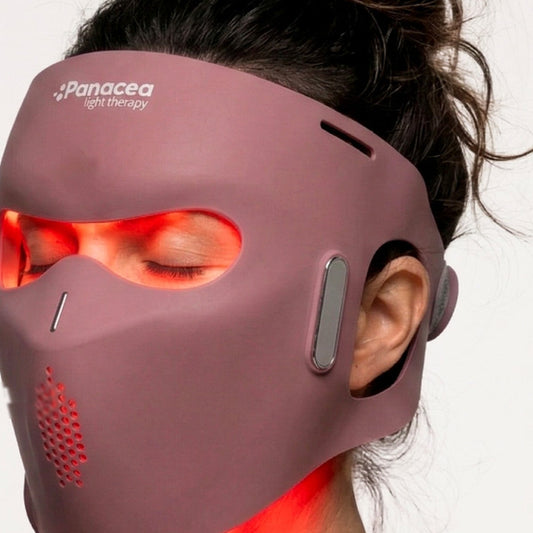
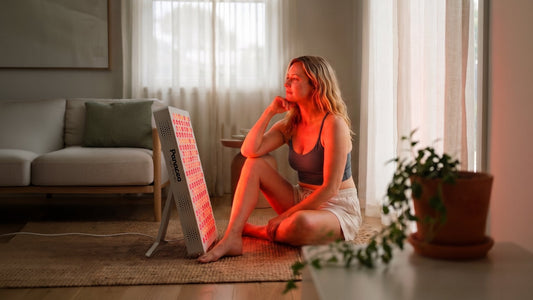
| Recommended devices | LED masks or panels (for home use) or professional light therapy in a salon |
| Wavelengths | 630–660 nm (red light), optionally combined with 460 nm (blue light) |
Please note: although red light is generally well tolerated, people with photosensitive skin conditions or users of certain medications (such as isotretinoin) should consult a doctor.
Conclusion
Red light therapy is a non-invasive, research-described way to support skin affected by acne vulgaris, especially for people looking for a natural addition to their skincare routine. By tempering inflammatory responses, helping regulate sebum production, and supporting the skin’s natural healing process, red light can be a valuable addition to an existing skincare routine.
It also works well in combination with blue light, which targets the bacterial component of acne. Whether you choose a salon session or a home device, red light therapy is a comfortable treatment that is generally well tolerated. Results vary from person to person.
Red light therapy is a wellness application and not a replacement for medical care. Results vary from person to person; consult your doctor if you have any concerns.