
What Is Red Light Therapy and How Does It Work?
Share
Introduction to Red Light Therapy
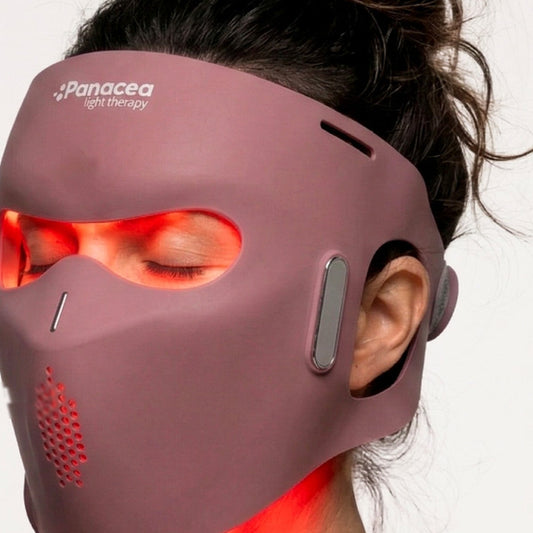
Red light therapy, also known as photobiomodulation, is an innovative and increasingly popular wellness application that uses specific wavelengths of red and near-infrared light. This therapy uses concentrated light to provide various health benefits without the use of harmful UV radiation, chemicals, or heat. The technique helps improve blood circulation, promotes skin repair, reduces oxidative stress, and increases energy production in cells.
Why Light Is So Important
Light plays an essential role in our daily lives. Sunlight provides us with warmth and vitamin D and helps us maintain the rhythm of day and night. In addition to the visible light spectrum, which is measured in nanometers (nm), light also contains wavelengths that are beneficial to the body. Red light is found between 620 and 700 nm, while near-infrared light lies between 700 and 1000 nm. These specific wavelengths are invisible and are being studied for their benefits to well-being.
How Does Red Light Therapy Work?
Red light therapy uses light waves that penetrate deep into the skin and improve cellular function. Near-infrared light can penetrate very deeply into tissue, reaching up to 5 - 8 cm. Thousands of scientific studies describe these wavelengths as an energy source that can help the body function better, both in terms of appearance and performance and overall well-being. It is therefore not surprising that red light therapy is popular among dermatologists, beauticians, and professional athletes.
Benefits of Red Light Therapy
Red light therapy offers a wide range of benefits, including:
- Anti-aging: It promotes youthful, radiant skin by stimulating the production of collagen and elastin.
- Improved performance: It increases physical and mental capacity by stimulating energy production in cells.
- Energy and vitality: It supports energy metabolism and, consequently, your vitality.
- Anti-inflammatory: It may help reduce inflammatory responses, such as those involved in joint problems and arthritis.
- Skin improvement: It supports the skin in cases of scars, acne, stretch marks, and eczema and promotes natural skin repair.
Our Red Light Therapy products can be found in our shop.
Natural Sources of Red Light
Red light and near-infrared light occur naturally in sunlight, especially during sunrise and sunset. These wavelengths help our bodies feel more energetic and cheerful. Unfortunately, during the short and dark winter months, we do not receive enough of this beneficial light, especially when we spend a lot of time indoors.
What Should You Look For in Red Light Therapy?
Not all light sources are suitable for light therapy. Infrared lamps in saunas primarily generate heat without the correct wavelengths for photobiomodulation. In addition, some commercial devices are not powerful enough, even though they provide the correct wavelengths. Blue light from electronic devices can be harmful when used excessively, and UVB radiation from the sun can accelerate skin aging.
Panacea Light Therapy: Innovation in Light Technology
Our Panacea Light Therapy devices, particularly the ATP Pro models, are equipped with advanced LED technology that emits light at the most researched wavelengths: 630 nm, 660 nm, 810 nm, 830 nm, and 850 nm. These devices are designed to penetrate deeply into the skin and offer a wide range of health benefits, from skin improvement to muscle recovery. They are intended to support cellular function, such as improving energy production in the mitochondria and supporting cellular repair.
The Mechanisms of Red Light Therapy
Red light therapy works by activating the mitochondria, the powerhouses of our cells. Through the absorption of light at wavelengths from 630 nm to 850 nm, the mitochondria increase their production of ATP (adenosine triphosphate), which is essential for cellular energy and function. This improves the overall health of cells and tissues and supports recovery processes throughout the body.
Broad Impact of Red Light Therapy
Red light therapy has a systemic effect that extends beyond the illuminated area. Studies describe how red light can support natural skin repair, even in areas of the body that are not exposed, suggesting an overall improvement in cellular function and recovery.
Importance of Light Intensity
For an effective session, light intensity is crucial and is expressed in milliwatts per square centimeter (mw/cm²). This is measured at a distance of 15 cm from the light source. As you move farther away from the source, the intensity decreases. It is essential to know how a device has been tested and certified to ensure quality. The ATP Pro series has a high light intensity of 217mw/cm2 at a distance of 7.5cm.
Panacea Light Therapy Standards
Our ATP Pro models are designed to deliver the light intensity used in research at the most studied wavelengths. These devices use five different wavelengths and near-infrared light to provide a wide range of health benefits. Each new production batch is tested in independent laboratories to ensure that you receive the highest quality and effectiveness. At a distance of 15 cm, our system quickly provides the dose of red and near-infrared light used in research. Results vary from person to person.
At Panacea Light Therapy, we believe in the power of red light therapy and want to make this science simple and accessible to everyone. Whether you are new to it or already have experience, our team is ready to help with all your questions and guide you toward greater well-being with our advanced technology.
The Science
There are many scientific studies on the benefits and effects of red light therapy. Below is a selection of some of the most significant studies:
Hamblin, M.R. (2018). Mechanisms and applications of the anti-inflammatory effects of photobiomodulation. AIMS Biophysics, 5(4), 324-343.
This review discusses the anti-inflammatory effects of red light therapy and the mechanisms underlying them. The review describes how exposure to red light may help reduce inflammation by inhibiting pro-inflammatory cytokines and stimulating the production of anti-inflammatory cytokines.
de Sousa, R.A., et al. (2018). Effects of photobiomodulation therapy, pharmacological therapy, and physical exercise as single and/or combined treatment on the inflammatory response induced by experimental osteoarthritis. Lasers in Medical Science, 33(7), 1419-1429.
This study examined the effect of red light therapy on the inflammatory response in experimental osteoarthritis. The results indicated that exposure to red light may help reduce inflammation and pain associated with this condition.
Chung H, Dai T, Sharma SK, Huang YY, Carroll JD, Hamblin MR. The nuts and bolts of low-level laser (light) therapy. Ann Biomed Eng. 2012;40(2):516-533. doi:10.1007/s10439-011-0454-7
This review describes the effects of red light therapy at wavelengths of 660 nm and 850 nm and suggests that these wavelengths may be used to support various conditions, including skin repair, arthritis, and neuropathic pain. The authors suggest that these wavelengths work by stimulating mitochondrial activity in cells.
Huang, Y.Y., et al. (2011). Biphasic dose response in low level light therapy. Dose-Response, 9(4), 602-618.
This study examined the effects of different doses of red light therapy on cellular processes in the body. The results showed that red light therapy has a biphasic dose response, meaning that different doses produce different effects.
Our Red Light Therapy products can be found in our shop.
Red light therapy is a wellness application and not a substitute for medical care. Results vary from person to person; consult your doctor if you have any concerns.