
Red Light Therapy for Muscle Building and Fitness: The Power of Light Down to the Cellular Level
Share
In the world of fitness and muscle building, we are exposed daily to a flood of trends, supplements, and techniques. But what if one of the most interesting methods for supporting muscle recovery, growth, and performance were not a pill or training plan, but light?
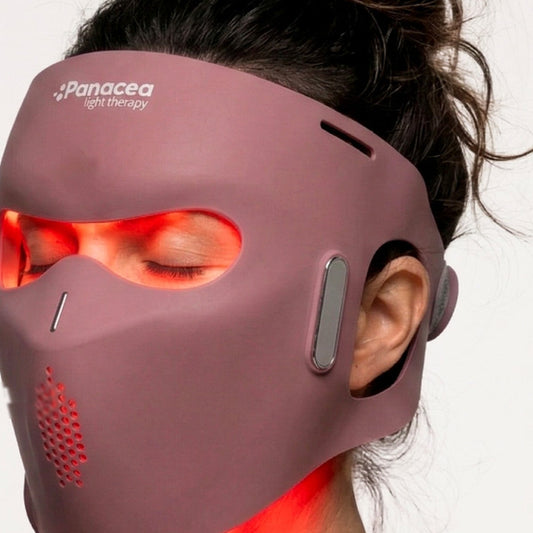
Welcome to the world of red light therapy, or as science calls it: photobiomodulation. A fascinating technology in which specific light waves support the body's natural recovery ability. In this blog, we explore the science behind red light, with particular attention to muscle growth and the role of different wavelengths, including techniques such as pulsing.
What Is Red Light Therapy?
Red light therapy is a non-invasive wellness application that directs low-intensity light at the body. It uses specific wavelengths in the red (630–660 nanometers) and near-infrared spectrum (810–1060 nanometers). These light waves penetrate the skin and reach deeper tissues, including muscles, connective tissue, and even bone.
The key to how it works lies in our cells, more specifically in the mitochondria, the body's powerhouses. When mitochondria are exposed to red or near-infrared light, they increase their production of adenosine triphosphate (ATP). ATP is the fuel for virtually every biological process in the body, including muscle contractions, recovery, and cell renewal.
Red Light and Muscle Growth: What Does the Science Say?
Various studies describe how exposure to red light may contribute to muscle hypertrophy (increased muscle mass), post-workout recovery, and reduced muscle fatigue. This occurs through multiple mechanisms:
- Increased ATP production: More energy means more efficient recovery and growth.
- Reduced inflammation: Red light can ease inflammatory factors that hinder muscle growth.
- Stimulation of muscle stem cells (satellite cells): Essential for muscle regeneration.
- Improved blood circulation: More oxygen and nutrients reach the muscle tissue.
A review by Salehpour et al. (2019) described that light at 660 nm and 810 nm penetrates muscle and brain tissue, with interesting outcomes for cellular activity and recovery.
Read the research here
The Power of Wavelengths: 630 nm to 1060 nm
Each type of red or near-infrared light has a different effect, depending on the depth to which it penetrates the body. Below is an overview of the most commonly used wavelengths in red light therapy:
| Wavelength | Effect |
|---|---|
| 630 nm | Very superficial, stimulates skin recovery, collagen production, and local inflammation reduction. |
| 660 nm | Deeper penetration than 630 nm, ideal for muscle recovery and mitochondrial stimulation. |
| 810 nm | Penetrates deeply into muscle and nerve tissue, promoting systemic recovery. |
| 850 nm | Popular among athletes; stimulates deep tissue recovery and improves blood flow. |
| 940 nm | Even deeper penetration, beneficial for joints and deeper muscles. |
| 1060 nm | Currently being studied for its thermal depth effects in deeper tissue. |
The combination of these wavelengths provides a broad spectrum of biological benefits, from skin rejuvenation to muscle strengthening and nervous system support.
Pulsing: Why flashing light sometimes works better
Many people assume that more light is simply better. But research reveals something surprising: pulsed light, in which the light is switched on and off at a high frequency, can be biologically more effective than constant light.
Why is that? It appears that cells may be more sensitive to intermittent stimulation. Pulsing promotes:
- Deeper tissue penetration
- Less skin heating
- More efficient ATP stimulation at lower doses
Some studies describe that pulsed 660 nm or 850 nm light at frequencies such as 10 Hz or 40 Hz may be more effective for recovery and muscle development than continuous light. This is especially interesting for athletes who regularly use red light therapy after strength training or cardio.
Practical Use for Fitness and Muscle Growth
For those who want to integrate red light therapy into their training regimen, there are several guidelines:
- Session duration: 5 to 20 minutes per muscle group
- Distance from skin: 10 to 30 cm, depending on the device
- Frequency: 3 to 5 times per week
- Combinations: Easy to combine with creatine, protein shakes, and cold therapy
Many users experience more comfortable muscle recovery and increased energy after regular use over several weeks. Results vary from person to person.
Conclusion: Light as a powerful tool for muscle growth
Red light therapy is not a fad, but an extensively researched approach to supporting the body's recovery and resilience. By using the right wavelengths in combination with pulsed light, it becomes possible to influence highly targeted biological processes, including muscle growth, recovery, and the reduction of inflammatory responses.
At Panacea Light Therapy, we combine the latest insights with high-quality equipment that uses precisely the wavelengths most extensively described in research: 630, 660, 810, 850, 940, and 1060 nanometers.
Whether you're a dedicated athlete, recovering from an injury, or simply looking to take your fitness routine to the next level, light can take you a long way.
Sources and further reading
- Salehpour, F., Cassano, P., & Rouhi, N. (2019). Penetration profiles of visible and near-infrared lasers and LED light through the head tissues. Photobiomodulation, Photomedicine, and Laser Surgery. Link
- Salehpour, F., Sadigh-Eteghad, S., Mahmoudi, J. (2023). Photobiomodulation for the Brain. Springer. Read via Google Books
Red light therapy is a wellness application and not a replacement for medical care. Results vary from person to person; consult your doctor if you have any concerns.