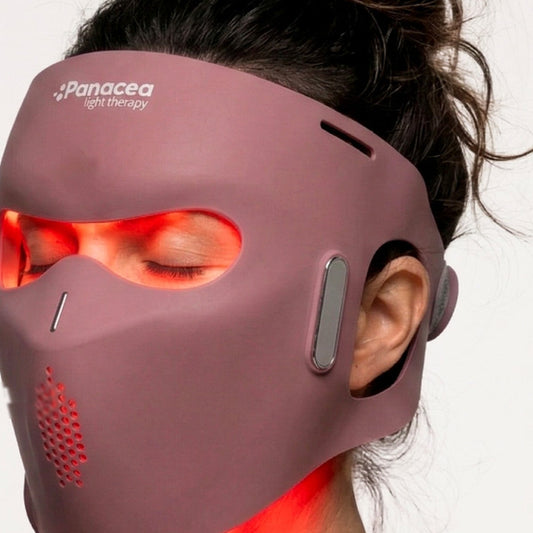

Red light therapy for allergies
Share
Natural Support During Spring
Every spring, millions of people once again experience the unpleasant effects of seasonal allergies such as hay fever. Sneezing, a blocked nose, itchy eyes, and fatigue can significantly disrupt daily life. Alongside their usual approach, many people look for a natural way to feel more comfortable during pollen season. Increasingly, people are turning to light as a complement to their daily routine.
Red light therapy, also known as photobiomodulation therapy, is one such complementary approach: a wellness application described in research.
What Is Red Light Therapy?
Red light therapy uses precise wavelengths of red and near-infrared light that penetrate deeply into the body. These light waves stimulate mitochondria—the energy factories of our cells—resulting in the production of more ATP (cellular energy). This process supports the natural recovery capacity of cells, may help moderate inflammatory responses, and may influence the immune system in a balanced way.
For allergy symptoms, research is examining reduced swelling, reduced histamine release, improved circulation, and support for the recovery of irritated mucous membranes or skin.
How Can Red Light Therapy Support Allergy Relief?
Inflammation plays a central role in allergic reactions. The body overreacts to pollen or dust particles and activates an immune response involving histamine, cytokines, and mucus production, among other factors.
Red light therapy is being studied because it may influence this process in several ways:
- Anti-inflammatory: may help moderate swelling and irritation in the airways and skin
- Immunomodulatory: may contribute to a calmer immune response
- Recovery-supporting: supports the natural recovery of irritated mucous membranes
- Soothing: may provide comfort in cases of itching, a feeling of breathlessness, or a blocked nose
How It Works at Each Wavelength
Panacea Light Therapy uses six specific wavelengths: 630 nm, 660 nm, 810 nm, 850 nm, 940 nm and 1060 nm. Each wavelength has a unique effect:
630 nm – Skin Soothing
This wavelength works on the superficial layers of the skin and is being studied for allergic skin reactions such as eczema, redness, or itching.
660 nm – Nasal Mucosa and Sinuses
Penetrates deeper than 630 nm and is being studied for irritated nasal mucosa. May help reduce swelling and contribute to more comfortable breathing during hay fever.
810 nm – Airways and Lung Tissue
Penetrates into the airways and is being studied for moderating inflammatory responses in the respiratory tract. Relevant for a feeling of breathlessness or allergy-related coughing.
850 nm – Lymphatic System and Immune Function
May support the removal of inflammatory substances through the lymphatic system. Supports balance in the immune system.
940 nm – Deep-Acting Anti-Inflammatory Support
Penetrates into muscle and chest tissue and may provide comfort in cases of chest tightness or a feeling of breathlessness resulting from allergies.
1060 nm – Overall Energy Balance and Cognitive Support
This wavelength is being studied for its effects on cerebral blood flow and neuroinflammation. It may provide support for allergy-related fatigue and “brain fog.”
Scientific Evidence
Various studies describe the effects of red light therapy on allergy symptoms:
-
Rhinolight therapy (light therapy applied through the nasal cavity) has been studied in people with hay fever. This study reported less swelling and fewer symptoms.
Source: Sherali, N. (2018) - A recent review of airway inflammation describes how red light affects cytokines such as IL-5 and eotaxin—key factors in allergic reactions.
Source: Hanusrichterova & Mokry, 2024 – American Journal of Physiology - Research into the application of red light on the skin has reported less redness and itching in cases of allergic eczema and contact allergies.
Source: Bella, Z. (2010) – University of Szeged - Further research describes how red light may inhibit histamine activity and reduce mucus production in the airways.
Source: Li et al., 2020 – bioRxiv
Who May Find This Interesting?
This application may be of interest to people dealing with:
- Hay fever or pollen allergies
- Breathlessness associated with allergic asthma, as a complement to regular medical care
- Recurring sinus symptoms
- Allergic skin symptoms such as eczema or hives
- Fatigue or mental exhaustion resulting from allergies
Red light therapy is a natural and generally well-tolerated way to experience greater comfort with allergy symptoms. Thanks to the versatility of the wavelengths used, Panacea Light Therapy can support both superficial symptoms and deeper tissues. Results vary from person to person.
Red light therapy is a wellness application and not a substitute for medical care. Results vary from person to person; consult a doctor if you have symptoms.