
Red Light Therapy and ATP Production: How Do 630-1060 nm Wavelengths Work on Mitochondria?
Share
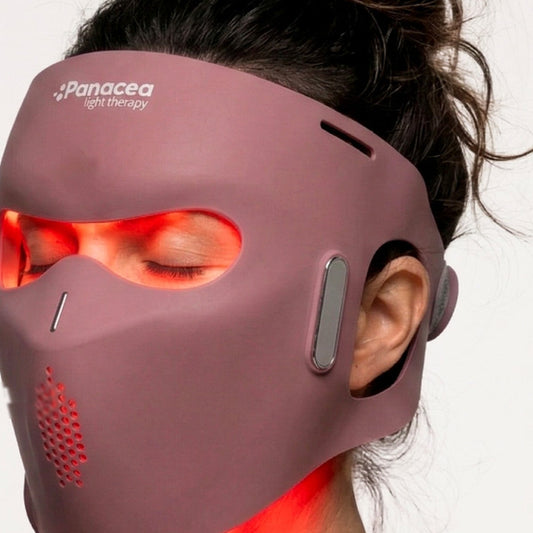
Red light therapy (or photobiomodulation) is an emerging wellness application that uses specific wavelengths of light, usually in the red and near-infrared spectrum, to stimulate cellular processes. An increasing number of studies describe how certain wavelengths, particularly 630 nm, 660 nm, 810 nm, 850 nm, 940 nm, and 1060 nm, may affect energy production in the mitochondria, with ATP as the key component.
What is ATP and why are mitochondria important?
ATP (adenosine triphosphate) is the body's energy currency. Every cell, especially in organs with high energy demands such as the brain, heart, and muscles, produces ATP in its mitochondria through a process called oxidative phosphorylation.
When mitochondria function suboptimally, for example due to aging, inflammation, or chronic fatigue, ATP production declines. This is where red light therapy comes in.
How does red light therapy stimulate ATP production?
The key to the effect lies in the mitochondrial enzyme cytochrome c oxidase (complex IV). This chromophore absorbs light in the red/near-infrared (NIR) spectrum. When exposed to specific wavelengths, the following occurs:
- Increased permeability of the mitochondrial membranes
- Increased oxygen consumption
- Increased ATP synthesis
- Increased production of growth factors and reduced oxidative stress
The Role of Wavelengths: 630, 660, 810, 850, 940 & 1060 nm
| Wavelength (nm) | Effect | Penetration | Supported by research |
|---|---|---|---|
| 630 nm | Stimulates cell division and collagen synthesis | Superficial (skin) | Kohlhaas et al., 2024 |
| 660 nm | Activates cytochrome c oxidase | Up to several mm | Glass, 2023; Lin et al., 2024 |
| 810 nm | Deep penetration, brain tissue | 2–3 cm | Tuchin et al., 2024 |
| 850 nm | Supports ATP synthesis | 3–5 cm | Wetzel et al., 2023 |
| 940 nm | Improves circulation and NO production | 4–5 cm | Hernández-Bule et al., 2024 |
| 1060 nm | Thermal effect on deeper tissue and cell membranes | Deeper than 5 cm | Lin et al., 2024 |
Relevant Scientific Studies
-
Tuchin et al. (2024)
“Transcranial photobiomodulation for brain diseases”
Described increased ATP production and neuroplasticity with the use of 660, 810, 850, and 1064 nm in brain modulation.
View PDF -
Glass (2023)
“Photobiomodulation: a systematic review”
Describes ATP stimulation at 660 and 850 nm in human skin cells.
View article -
Lin et al. (2024)
“Photobiomodulation therapy on brain”
810 nm and 1060 nm were described in relation to brain functions and ATP stimulation via vasodilation.
Read more -
Hernández-Bule et al. (2024)
“Comprehensive Review on Photobiomodulation”
Compared the effects of 810, 1064, and other wavelengths on mitochondrial targets.
Link to PDF -
Wetzel et al. (2023)
Described increased mitochondrial function in human cells with 810 and 850 nm.
View PDF -
Salehpour et al. (2023)
Book chapter on Photobiomodulation and the brain describes ATP stimulation at 630–1060 nm.
View book -
Nairuz & Lee (2024)
Research into increased ATP with transcranial illumination (810 nm).
View study -
Kaffash et al. (2025)
Review study on ATP generation and mitochondrial response to light in implant development.
Read here -
Zheng et al. (2025)
Relationship between photosynthetic light and ATP response in plant cells, relevant to cross-species insights.
View PDF
Practical Applications of Red Light Therapy
- Brain health: Research-documented increase in ATP in brain cells (810/1060 nm).
- Skin rejuvenation: Stimulation of collagen production (630/660 nm).
- Muscle recovery: Supporting energy availability (850/940 nm).
- Tempering the inflammatory response: Reduction of oxidative stress via ATP upregulation (850 nm).
- Sleep and cognition: Via lymphatic activation in the brain at 810/1060 nm.
Conclusion
Red light therapy with specific wavelengths (630 to 1060 nm) has been associated in research with effects on mitochondrial function, particularly ATP production. Its effects depend on wavelength, intensity, exposure duration, and target depth. This form of light application is increasingly being studied as a wellness application and is generally well tolerated. Results vary from person to person.
✨ When choosing red light therapy, always consider products with measured intensity, appropriate wavelength alignment, and research support.
📚 References & Further Reading:
- Tuchin et al. (2024) - Neurophotonics. Link
- Glass (2023) - Aesthetic Surgery Journal. Link
- Salehpour et al. (2023) - Photobiomodulation for the Brain. Google Books
- Wetzel et al. (2023) - PDF
- Hernández-Bule et al. (2024) - PDF
Red light therapy is a wellness application and is not a substitute for medical care. Results vary from person to person; consult a doctor if you have symptoms.