
Red light therapy for UV damage: support for skin recovery at the cellular level
Share
UV damage to the skin, caused by exposure to sunlight or tanning beds, can lead to redness, swelling, pigmentation spots, and premature skin aging. While sunscreens protect against new damage, people are increasingly looking for methods that support the repair of already damaged skin.
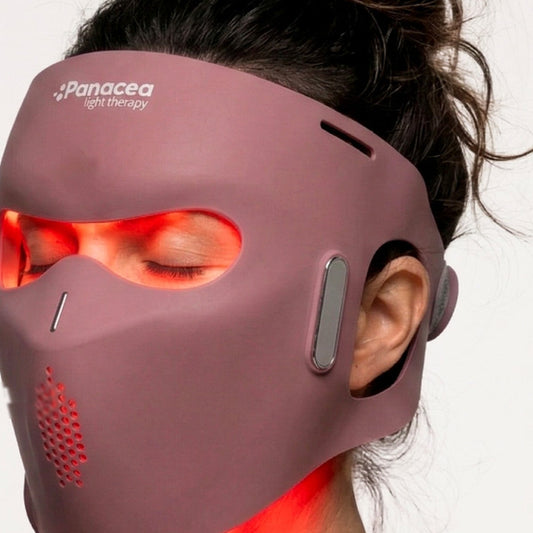
Red light therapy, also known as photobiomodulation (PBM), is emerging as a promising, research-documented wellness application to support the skin’s recovery from UV damage.
In this blog, you’ll learn what red light therapy is, how it works, what benefits it offers for UV-damaged skin, and which studies describe these effects.
What is red light therapy?
Red light therapy uses light in the red and near-infrared spectrum, usually between 630 and 850 nanometers (nm). These specific wavelengths penetrate deeply into the skin layers and stimulate mitochondrial activity in skin cells. This leads to increased production of ATP (adenosine triphosphate), the energy source of cells, supporting the skin cells’ natural ability to repair themselves.
Additionally, red light therapy may help temper inflammatory processes in the skin and supports the production of collagen and elastin, two proteins essential for the skin’s firmness and elasticity.
Key wavelengths and their effects
| Wavelength | Light type | Effect |
|---|---|---|
| 630 nm | Red light | Superficial skin layers, collagen stimulation |
| 660 nm | Deep red light | Cell repair, anti-inflammatory, skin structure |
| 810 nm | Near-infrared | Deep penetration, muscle and skin repair |
| 850 nm | Near-infrared | Stimulates cellular function, supports skin repair |
By combining multiple wavelengths, both superficial and deeper skin layers can be illuminated, supporting repair on multiple levels.
Benefits of red light therapy for UV damage
Red light therapy offers several potential benefits for skin exposed to UV radiation:
-
Stimulates skin repair
Supports cell renewal and stimulates collagen and elastin production, which may contribute to healthy, smooth skin. -
Soothes inflammatory reactions
May help reduce redness, swelling, and inflammatory reactions that occur after exposure to sunlight. -
Improves skin texture
Fine lines, wrinkles, and uneven skin texture, often caused by sun damage, may become visibly less pronounced. -
Comfortable and non-invasive
The treatment is non-invasive and generally well tolerated, including with regular use. -
Can be used at home or professionally
Available in salons and through home devices for use in your own routine.
Scientific evidence
Study 1: Red light and inflammation caused by UVB radiation
Title: Transcriptome analysis of human dermal fibroblast cells reveals potential mechanisms underlying the protective effects of visible red light against damage from ultraviolet B light
Published in: Journal of Photochemistry and Photobiology B: Biology (Elsevier, 2019)
Link: Read the study on ScienceDirect
In this study, human fibroblasts were exposed to UVB radiation, after which some of the cells were treated with red LED light. The researchers analyzed gene expression and found that red light suppressed inflammatory processes and activated genes involved in DNA repair. According to the researchers, this indicates a potential protective role for red light in UV-related skin damage.
Study 2: Combination with blue light and skin protection
Subject: Study of the effects of blue LED light on human fibroblasts and skin repair
Published in: Life (MDPI), 2022
Link: View the article on MDPI
Although this study focused on blue light, it found that exposure to LED light also reduced oxidative stress and stimulated cell growth. Because red and blue light are often combined in skincare, the results may point to a synergistic effect: blue light for protection, red light for recovery.
Who is red light therapy suitable for?
Red light therapy can be incorporated into the routines of various groups with UV damage or an increased risk of it, such as:
- People with sun damage (e.g., after a sunny vacation or tanning bed use)
- People with sensitive skin that reddens easily
- UV-induced skin aging (pigmentation spots, fine lines)
- Skin that recovers slowly after sunburn
- Mature skin with reduced collagen production
The treatment is suitable for both women and men and can be used for maintenance or to support recovery.
Conclusion
Red light therapy is a non-invasive method described in research to support the skin in recovering after UV damage. Thanks to its anti-inflammatory properties and ability to stimulate cell renewal, red light may help calm the skin after sun exposure and counteract visible signs of premature aging. Results vary from person to person.
For those regularly exposed to sunlight or tanning beds, or experiencing persistent redness or changes in pigmentation, red light therapy can be a valuable addition to a skincare routine. Combining red light with blue light is also being studied in relation to protection against future damage.
Considering red light therapy? Contact us for personalized advice!
Red light therapy is a wellness application and not a substitute for medical care. Results vary from person to person; consult your doctor if you have symptoms.