
Support skin recovery after sun exposure with red light therapy
Share
Why red light can naturally support sensitive summer skin, and why it is so popular in Australia
The sun on your face, a light breeze, and the sense of freedom that spring and summer bring—it is wonderful. But honestly, sometimes we leave ourselves exposed to those warm rays just a little too long. Before you know it, your skin is red, tight, and burning. Even without an actual sunburn, your skin often feels hypersensitive or dehydrated after a day outdoors.
Instead of simply waiting for your skin to recover on its own, there is another deep-acting and natural way to support your skin alongside cooling gels and creams: red light therapy.
What does the sun do to your skin?
Sunlight consists of different types of radiation, including UVA and UVB. These damage skin cells, trigger inflammatory processes, and break down collagen. You notice this as redness, dryness, sensitivity, or even peeling. Microdamage that is invisible to the naked eye can also slow the natural recovery process.
It is precisely during this recovery phase that it is essential to support the skin at the cellular level. That is where red light therapy comes in.
How does red light therapy support skin recovery?
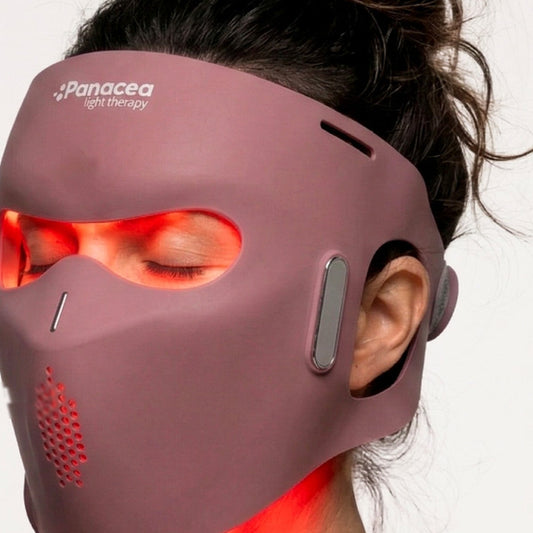
Red light therapy (also known as photobiomodulation) uses specific light wavelengths, particularly 630 nm and 660 nm, that penetrate deeply into the skin layers. These wavelengths activate the mitochondria in your skin cells, leading to increased production of ATP (cellular energy). This supports the natural recovery capacity of skin cells, may help calm inflammatory responses, and supports collagen production.
What this means for your skin:
- Support for skin recovery after sun exposure
- Less redness, itching, or tightness
- Promotion of collagen production
- Strengthening of the skin barrier
- Reduction of oxidative stress (caused by UV)
Many users find that their skin feels calmer and stays better hydrated. Results vary from person to person.
The power of the right wavelengths
At Panacea Light Therapy, we use advanced light panels that work with, among others, 630 nm and 660 nm, the two wavelengths most frequently described in research on skin recovery.
- 630 nm: Works superficially in the upper skin layers. Stimulates cell renewal and soothes mild redness or dryness.
- 660 nm: Penetrates more deeply and supports connective tissue recovery, skin recovery, and the calming of inflammatory responses.
When red light therapy is combined with wavelengths such as 850 nm or 940 nm, it may also support deeper inflammatory responses or prolonged skin sensitivity, such as sun allergy or skin that has had extensive sun exposure.
Why red light therapy is so popular in Australia
Interest in red light therapy is growing not only in Europe and North America. Particularly in sun-drenched countries such as Australia, the method is already well established. In Australia, the risk of sunburn and UV damage is much greater due to the thinner ozone layer and high solar intensity. The skin is therefore exposed to greater ongoing stress, leading to a strong focus on natural skin recovery methods.
Australian skin clinics, wellness centres, and consumers frequently use red light therapy as care after sun exposure. Not only for cosmetic recovery, but also as support for sun allergy, eczema, or hypersensitive skin. The use of LED therapy for skin support has by now become part of regular skincare routines there.
Research from, among others, the University of Sydney describes how light therapy with 630 and 660 nm is used to support skin recovery, calm inflammatory responses, and improve skin quality after UV exposure.
Scientific evidence
Various studies describe a supportive effect of red light therapy on skin after exposure to UV radiation:
-
Barolet et al. (2008) investigated how 660 nm light supports skin recovery after sun exposure. The study described less redness, faster skin recovery, and improved skin texture.
View study (PDF) -
Auger et al. (2009) described in a double-blind study that red light supports collagen recovery in UV-damaged skin.
Read more -
Oh & Jeong (2019) described that LED therapy may reduce inflammatory factors in UV-damaged skin, including free radicals.
View publication -
Avci et al. (2013) described that red light (660 nm) supports skin recovery without causing thermal damage.
Read full article
Who may benefit from this?
- You have sensitive skin that becomes red quickly after sun exposure
- You want to naturally support your skin’s recovery
- You are looking for preventive skincare during the sunny season
- You want to give your skin a boost after days at the beach, gardening, or exercising outdoors
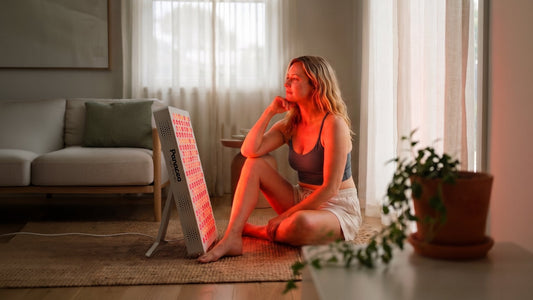
Red light therapy is generally well tolerated, feels comfortable, and is suitable for home use, including preventively. A short session after a day in the sun may contribute to skin that feels fresher and calmer.
Red light therapy is a wellness application and not a replacement for medical care. Results vary from person to person; consult your doctor if you have any concerns.