
Red Light Therapy and Skin Rejuvenation: What Does the Research Say About Anti-Aging?
Share
A comprehensive guide to how Red Light Therapy works for skin rejuvenation, supported by current research.
The quest for youthful skin is as old as humanity itself. Today, attention has shifted from aggressive, invasive methods to natural, cell-stimulating technologies. One of these is Red Light Therapy, also known as Low-Level Laser Therapy (LLLT) or Photobiomodulation (PBM). This therapy uses red and near-infrared light to activate biological processes that help the skin repair, firm, and rejuvenate itself.
But how exactly does this work? And which wavelengths are most effective for anti-aging? This article provides a clear overview of what the research describes.
What is Red Light Therapy and how does it work?
Red Light Therapy uses light waves with a specific wavelength (usually between 630 and 1060 nanometers) that penetrate deep into the skin. These light waves are absorbed by the mitochondria, the energy factories of our cells. The result is increased production of ATP (adenosine triphosphate), the energy source needed for cell repair, cell division, and collagen production.
This increased cellular energy leads to:
- Stimulation of fibroblasts (production of collagen and elastin)
- Improved microcirculation and oxygen supply
- Inhibition of inflammatory processes
- Support for the skin’s natural repair process
- Reduction of oxidative stress
“RLT increases mitochondrial activity and enhances dermal regeneration, leading to improved skin texture, tone, and elasticity.”
Source: Avci et al., 2013 – PMC4126803
Wavelengths and their anti-aging effects
1. 630 nm – Superficial skin improvement
- Stimulates epidermal cell renewal
- Improves superficial wrinkles, complexion, and pigmentation
- Best suited for skin refreshment and mild skin aging
2. 660 nm – The most studied wavelength for collagen stimulation
- Penetrates 3–4 mm deep into the dermis
- Activates fibroblasts to produce type I and III collagen
- Reduces wrinkles and increases skin thickness and elasticity
“Exposure to 660 nm light significantly increased dermal collagen synthesis and reduced wrinkle depth.”
Source: Lee et al., 2021 – MDPI
3. 810 nm – ATP stimulation in deeper skin layers
- Promotes mitochondrial energy production
- Helps repair UV damage and address skin aging
- Often used for scar healing and cellular regeneration
4. 850 nm – Inflammation reduction and cellular repair
- Penetrates up to 6 mm into the skin
- Inhibits inflammatory cytokines such as IL-6 and TNF-α
- Often combined with 660 nm for synergy
“Combined 660/850 nm exposure reduced inflammation and enhanced fibroblast metabolism.”
Source: Lu et al., 2024 – ScienceDirect
5. 940 nm – Vascular and immune modulation
- Regulates blood flow and immune activity in the skin
- Supports recovery from chronic inflammation and skin laxity
6. 1060 nm – Deep thermal stimulation and skin tightening
- Used for thermal collagen contraction
- Being investigated for tightening the subcutaneous tissue (e.g., jawline and double chin)
“1060 nm light causes subdermal tightening through collagen remodeling.”
Source: Weiss et al., 2020 – JDD
Summary: Physiological Benefits for the Skin
| Process | Result | Supported by wavelengths |
|---|---|---|
| ↑ ATP production | More cellular energy, faster regeneration | 810 nm, 850 nm |
| ↑ Collagen/elastin | Fewer wrinkles, firmer skin | 630–660 nm |
| ↓ Inflammation | Supports the treatment of skin aging | 850–940 nm |
| ↑ Blood flow | Improved complexion and nourishment | 660–850 nm |
| Thermal stimulation | Skin tightening | 1060 nm |
Practical Application
Red light therapy is:
- Non-invasive – no injections, no downtime
- Comfortable and generally well tolerated – suitable for all skin types
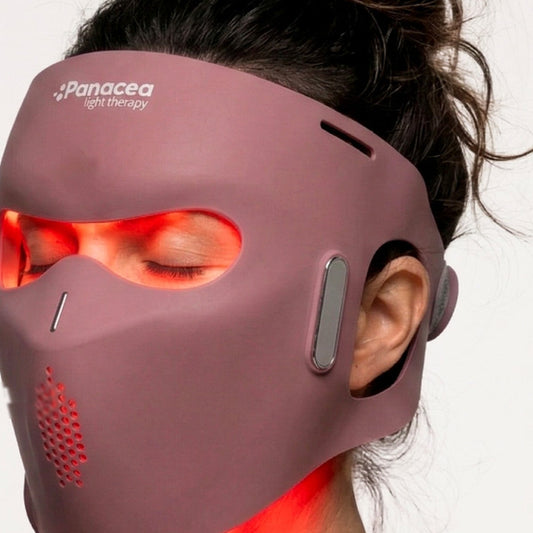
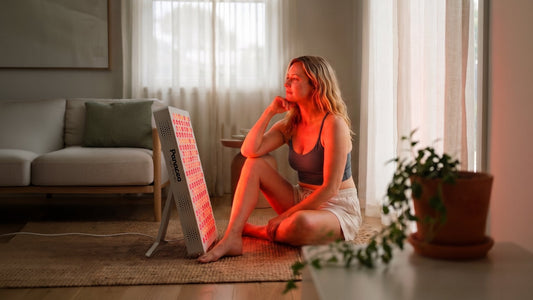
- Can be used at home – LED masks or panels
- Affordable – one-time investment for use at home
"In a study, a large proportion of users of a 660/830 nm LED device reported improvement in skin tone and a reduction in fine lines."
Source: Bu et al., 2024 – CCID
Conclusion: A Non-Invasive Approach Supported by Research
Red light therapy is an interesting option for those who want to support skin aging in a natural way. By stimulating skin cells at the energy level, it may contribute to the following with regular use:
- Fewer wrinkles
- Improved elasticity
- Tighter contours
- Healthier, more radiant skin
It is therefore a suitable routine for people who want to work on skin rejuvenation in a non-invasive way, without downtime. Results vary from person to person.
Scientific Articles on Red Light Therapy and Skin Rejuvenation
-
Avci et al. (2013).
Low-Level Laser (Light) Therapy (LLLT) in Skin: Stimulating, Healing, Restoring
🔗 View article on PubMed Central -
Lee et al. (2021).
Use of a Light-Emitting Diode Device for Neck Rejuvenation
🔗 View article on MDPI -
Lu et al. (2024).
Role of fibroblast autophagy and proliferation in skin anti-aging
🔗 View article on ScienceDirect -
Rostkowska et al. (2023).
Dermatological Management of Aged Skin
🔗 View article on MDPI -
Gerasymchuk et al. (2023).
Sex-Dependent Skin Aging and Rejuvenation Strategies
🔗 View article on MDPI -
Zhang et al. (2024).
Skin Photobiological Effect Induced by Blue Light: Clinical Manifestation, Mechanisms, and Protection
🔗 View article on ScienceDirect -
Chwil et al. (2024).
Health-Enhancing Effects of Arthrospira and Spirulina Microalgae on Skin
🔗 View article on PubMed Central
What Research Describes
✔ Collagen production and skin elasticity
Research described an increase in collagen production and a reduction in wrinkle depth with red light therapy at 660 nm.
🔗 Lee et al., 2021 – MDPI
✔ Reduction of inflammation
850 nm and 940 nm suppress inflammatory markers, which are essential in chronic skin aging.
🔗 Lu et al., 2024 – ScienceDirect
✔ Tolerability and at-home use
Studies describe the use of LED devices for at-home skin rejuvenation.
🔗 Bu et al., 2024 – Taylor & Francis
✔ Fibroblast activation
Fibroblast proliferation plays a key role in skin rejuvenation and has been described as increased under red light exposure in research.
🔗 Rostkowska et al., 2023 – MDPI
Red light therapy is a wellness application and not a replacement for medical care. Results vary from person to person; consult your doctor if you have any symptoms.